
Big GST Changes Every Business Owner Must Know in 2026
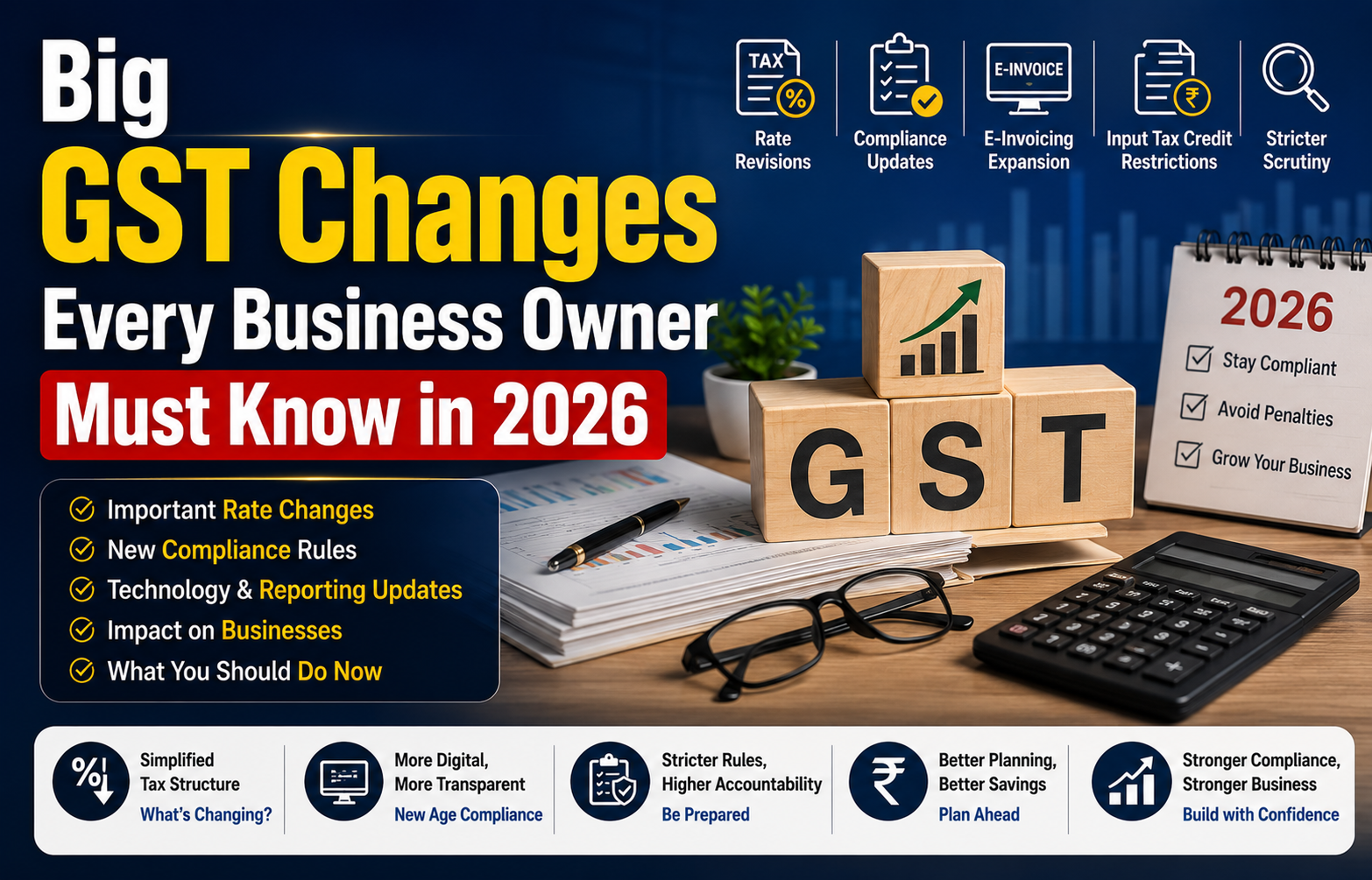
The GST framework in India continues to evolve as the government introduces new compliance measures, digital systems, and regulatory improvements to strengthen tax administration. In 2026, several big GST changes are expected to impact businesses, startups, SMEs, and professionals across different sectors.
For business owners, staying updated with GST regulations is extremely important to avoid penalties, maintain proper compliance, and improve financial management. As tax systems become more technology-driven and compliance-focused, businesses must adapt quickly to changing GST requirements.
At Nvedya Professionals LLP, GST advisory and compliance support help businesses understand regulatory updates and manage tax responsibilities more efficiently.
Why Businesses Must Understand Big GST Changes
GST compliance is no longer limited to simple return filing. The introduction of automation, digital verification systems, stricter reporting standards, and real-time data tracking is making GST compliance more detailed and structured.
These big GST changes are designed to:
- Improve tax transparency
- Reduce fake invoicing
- Increase compliance accuracy
- Strengthen digital tax systems
- Simplify long-term tax administration
Businesses that fail to stay updated with these changes may face compliance risks, notices, penalties, or operational difficulties.
Increased Focus on Digital GST Compliance
One of the biggest GST changes in 2026 is the growing shift toward digital compliance systems. GST authorities are increasingly using automated tracking, invoice matching, and AI-driven verification to identify irregularities and improve tax monitoring.
Businesses are now expected to maintain:
- Accurate invoice records
- Timely GST return filing
- Proper reconciliation of transactions
- Correct Input Tax Credit claims
Digital compliance accuracy is becoming more important than ever for avoiding GST-related disputes and notices.
Stricter Input Tax Credit Verification
Input Tax Credit (ITC) remains one of the most sensitive areas under GST compliance. In 2026, businesses are expected to face stricter verification and reconciliation requirements for claiming ITC benefits.
These big GST changes may require businesses to:
- Verify supplier compliance regularly
- Match invoices carefully
- Maintain accurate purchase records
- Monitor GST filing status of vendors
Incorrect ITC claims may lead to penalties, blocked credits, or compliance notices.
E-Invoicing and Automation Expansion
The government continues expanding e-invoicing requirements for businesses across different turnover categories. Automation in invoicing and return filing is becoming a central part of the GST ecosystem.
Big GST changes related to e-invoicing are expected to improve:
- Invoice transparency
- Real-time reporting
- Tax tracking accuracy
- Fraud prevention systems
Businesses using manual invoicing systems may need to upgrade their accounting and billing processes to remain compliant.
Greater Compliance Monitoring for Small Businesses
Small businesses and startups are also expected to experience tighter GST monitoring in 2026. Authorities are focusing more on identifying filing mismatches, delayed returns, and incorrect tax reporting.
To manage these big GST changes effectively, businesses should focus on:
- Timely GST return filing
- Regular bookkeeping updates
- Accurate accounting records
- Professional tax advisory support
Proper compliance systems help businesses avoid unnecessary legal and financial complications.
GST Changes Are Increasing the Importance of Proper Accounting
As GST regulations become more data-driven, proper accounting and bookkeeping are becoming essential for smooth compliance management.
Businesses with weak accounting systems often face:
- GST reconciliation issues
- Incorrect tax filings
- Delayed compliance
- Financial reporting errors
Strong accounting practices support accurate GST reporting and reduce compliance risks significantly.
Why Professional GST Guidance Is Becoming Important
Many business owners struggle to keep up with changing GST regulations while simultaneously managing operations and growth. Professional GST guidance helps businesses understand compliance requirements and avoid costly mistakes.
At Nvedya Professionals LLP, GST compliance services support businesses through:
- GST registration
- Return filing
- Input Tax Credit management
- Compliance monitoring
- Tax advisory and planning
Professional support helps businesses remain compliant while improving operational efficiency.
How Businesses Can Prepare for Big GST Changes
Businesses can prepare for changing GST regulations by adopting proactive compliance practices, including:
- Maintaining updated accounting systems
- Conducting regular GST reconciliations
- Using digital invoicing solutions
- Monitoring vendor compliance
- Seeking professional tax advisory support
Early preparation reduces compliance risks and improves financial transparency.
The Future of GST Compliance in India
The GST system in India is gradually moving toward greater automation, transparency, and digital integration. Future GST compliance is expected to rely heavily on technology-driven verification systems and real-time reporting.
Businesses that adapt early to these big GST changes will likely benefit from smoother operations, reduced compliance risks, and stronger financial management.
Conclusion
The big GST changes in 2026 are expected to significantly impact businesses across India. Increased digital monitoring, stricter Input Tax Credit verification, expanding e-invoicing requirements, and stronger compliance systems are making GST management more structured than ever before.
For business owners, staying informed and maintaining accurate compliance practices is essential for avoiding penalties and supporting long-term business growth. With proper accounting systems and professional guidance, businesses can adapt successfully to changing GST regulations and maintain stronger financial stability.
Media Contact
Nvedya Professionals LLP
📧 Email: contact@nvedya.in
🌐 Website: www.nvedya.in
Follow us on: Facebook | Instagram | LinkedIn