
ITR Filing FY 2025-26: What Is Form 26AS? How to Fix Errors and Avoid Tax Notices

ITR Filing FY 2025-26: What Is Form 26AS? How to Fix Errors and Avoid Tax Notices The ITR Filing FY 2025-26 season is one of the most important financial responsibilities for taxpayers. Filing your Income Tax Return accurately not only ensures compliance with tax laws but also helps you avoid unnecessary notices, delayed refunds, and penalties. One of the most critical documents that every taxpayer should verify before submitting their return is Form 26AS. Many taxpayers assume that if tax has been deducted by their employer or bank, everything will automatically reflect correctly in their tax records. However, mismatches in Form 26AS, missing TDS entries, or incorrect information can lead to tax notices and refund delays. Therefore, reviewing Form 26AS should be an essential part of your ITR Filing FY 2025-26 process. At Nvedya Professionals LLP, we help individuals, salaried employees, professionals, and businesses file accurate Income Tax Returns while minimizing compliance risks through expert tax advisory services. What Is Form 26AS? Form 26AS is a consolidated tax statement maintained against your Permanent Account Number (PAN). It acts as a comprehensive record of taxes deducted, taxes collected, advance tax payments, self-assessment tax, and certain high-value financial transactions reported to the Income Tax Department. Before beginning ITR Filing FY 2025-26, taxpayers should download and review Form 26AS to ensure that all tax-related information matches their financial records. Generally, Form 26AS contains details such as: Tax Deducted at Source (TDS) Tax Collected at Source (TCS) Advance Tax Payments Self-Assessment Tax Refund Details High-value transactions reported by banks and financial institutions Since the Income Tax Department cross-verifies your return using this information, any discrepancy may trigger compliance queries. Why Form 26AS Is Important Before Filing Your ITR Many taxpayers focus only on Form 16 while preparing their Income Tax Return. However, Form 16 alone may not contain every financial transaction recorded by the Income Tax Department. Reviewing Form 26AS before ITR Filing FY 2025-26 helps you: Verify TDS credits. Match taxes deposited by employers or deductors. Confirm tax payments. Detect reporting errors. Avoid claiming incorrect tax credits. Reduce the chances of receiving tax notices. Accurate reconciliation between Form 26AS, AIS, Form 16, and your own financial records ensures a smoother filing experience and faster refund processing. Common Errors Found in Form 26AS Even though Form 26AS is generated electronically, errors can still occur due to incorrect reporting by deductors or delays in updating tax records. Some of the most common issues include: 1. Missing TDS Entries Sometimes, employers, banks, or clients deduct tax but fail to deposit it on time or incorrectly report the transaction. As a result, the TDS credit may not appear in Form 26AS. 2. Incorrect PAN Details If the deductor mistakenly reports an incorrect PAN while filing TDS returns, your tax credit may not be reflected against your account. 3. Incorrect Tax Amount Occasionally, the tax deducted and the amount appearing in Form 26AS may differ due to reporting mistakes. 4. Duplicate Transactions Duplicate entries can increase your reported income or tax credits incorrectly, leading to mismatches during return processing. 5. Missing Advance Tax or Self-Assessment Tax If taxes paid by you are not reflected in Form 26AS, your total tax liability may appear higher than it actually is. 6. High-Value Transaction Mismatches Banks and financial institutions report certain high-value transactions to the Income Tax Department. If these transactions are inconsistent with the income declared in your return, they may attract additional scrutiny. How to Check Form 26AS Before ITR Filing FY 2025-26 Before filing your return, taxpayers should carefully compare Form 26AS with other tax-related documents. Review the following: Form 16 AIS (Annual Information Statement) Salary slips Bank interest certificates TDS certificates (Form 16A) Capital gains statements Tax payment challans Every tax credit claimed in your Income Tax Return should be supported by corresponding entries in Form 26AS. How to Fix Errors in Form 26AS If you identify any discrepancy, it is important to resolve it before submitting your Income Tax Return. Here are the steps you should follow: Contact the Deductor If TDS is missing or incorrectly reported, immediately contact your employer, bank, or deductor and request them to revise their TDS return. Verify PAN Details Ensure your PAN has been correctly quoted in every financial transaction. Check Tax Payment Challans If advance tax or self-assessment tax is missing, verify the challan details and confirm whether the payment has been successfully credited. Compare With AIS Cross-check Form 26AS with AIS to identify missing or mismatched entries before filing your return. Seek Professional Assistance If discrepancies remain unresolved, consulting tax professionals can help prevent future notices and ensure accurate reporting. Conclusion Accurate ITR Filing FY 2025-26 begins with verifying Form 26AS. Reviewing and correcting any discrepancies before filing helps ensure the right tax credits are claimed, speeds up refund processing, and reduces the risk of receiving tax notices. If you’re unsure about any mismatch, professional guidance can make the filing process smoother and fully compliant. At Nvedya Professionals LLP, we help individuals and businesses file their Income Tax Returns accurately and with confidence. Media Contact Nvedya Professionals LLP📞 Phone: +91 62620 03030 📧 Email: info@nvedya.in 🌐 Website: www.nvedya.in Follow us: Instagram | LinkedIn | Facebook
ITR Filing AY 2026-27: 9 Essential Checks Every Taxpayer Must Make
ITR Filing AY 2026-27: 9 Essential Checks Every Taxpayer Must Make ITR Filing AY 2026-27 is more than just submitting your income tax return before the due date. It is an opportunity to ensure that your financial records are accurate, tax benefits are fully utilized, and your return complies with the latest Income Tax regulations. Even a small mistake during filing can result in delayed refunds, notices from the Income Tax Department, or additional tax liabilities. With the Income Tax Department using advanced data analytics and automated verification systems, taxpayers should carefully review every detail before filing their returns. Whether you are a salaried employee, self-employed professional, business owner, or pensioner, following a systematic checklist can help you file your return accurately and confidently. At Nvedya Professionals LLP, we assist individuals and businesses with tax planning, compliance, and hassle-free ITR filing to ensure complete peace of mind. Why Accurate ITR Filing Matters An accurately filed Income Tax Return strengthens your financial credibility and helps avoid future tax disputes. It also serves as an important document while applying for loans, visas, tenders, and various financial transactions. Proper ITR Filing AY 2026-27 ensures: Faster refund processing Better tax compliance Reduced chances of tax notices Accurate reporting of income Maximum utilization of eligible deductions 1. Choose the Correct ITR Form Selecting the correct Income Tax Return form is the first and most important step. The applicable form depends on your income source, residential status, business income, capital gains, foreign assets, and other financial factors. Using the wrong ITR form may lead to defective returns and unnecessary compliance issues. 2. Verify AIS, Form 26AS and Form 16 Before starting ITR Filing AY 2026-27, compare your financial records with: Annual Information Statement (AIS) Form 26AS Form 16 Form 16A Pre-filled ITR details This reconciliation helps identify missing income, incorrect tax credits, or reporting mismatches. 3. Report Every Source of Income Many taxpayers report only salary income and unintentionally miss other taxable income. Ensure that your return includes: Salary Interest income Rental income Capital gains Freelance or professional income Dividend income Business income Reporting every income source correctly improves transparency and reduces compliance risks. 4. Don’t Forget Exempt Income Although exempt income is not taxable, it should still be disclosed wherever required. Examples include: Agricultural income Certain retirement benefits Tax-free interest Other exempt receipts Proper disclosure provides a complete financial picture and helps avoid unnecessary scrutiny. 5. Claim Only Eligible Deductions Tax-saving deductions should always be supported by valid documents. Common deductions include: Section 80C investments Health insurance premiums NPS contributions Home loan benefits Education loan interest Donations eligible under tax provisions Claiming only genuine deductions protects taxpayers from future notices and penalties. 6. Verify Your Bank Account Details Refund delays often occur because of incorrect or inactive bank account information. Before submitting your return, verify: Bank account number IFSC Code Validated refund account Active account status Accurate banking information ensures quicker refund processing. 7. Review Every Detail Before Submission A final review helps identify errors that may otherwise go unnoticed. Double-check: PAN and Aadhaar details Address and contact information Income figures Tax payments TDS credits Deductions claimed Tax computation Taking a few extra minutes for review can prevent future compliance issues. 8. File Your Return Before the Due Date Timely ITR Filing AY 2026-27 helps taxpayers avoid: Late filing fees Interest on tax dues Delay in refunds Loss of certain tax benefits Filing early also provides sufficient time to correct any mistakes if required. 9. Complete ITR Verification Submitting the return alone does not complete the filing process. After filing, verify your return through: Aadhaar OTP Net Banking Electronic Verification Code (EVC) Digital Signature Certificate (DSC) An unverified return is considered invalid under the Income Tax Act. Common Mistakes Taxpayers Should Avoid During ITR Filing AY 2026-27, avoid these common mistakes: Selecting the wrong tax regime Claiming incorrect deductions Ignoring AIS mismatches Missing additional income Using an incorrect ITR form Entering incorrect bank details Missing the filing deadline Forgetting ITR verification Avoiding these mistakes helps ensure smoother tax compliance. How Nvedya Professionals LLP Can Help Income tax laws continue to evolve every year, making professional guidance increasingly valuable. At Nvedya Professionals LLP, we provide: Income Tax Return Filing Tax Planning Tax Regime Selection Business Tax Advisory GST Compliance Financial Consulting Tax Notice Assistance Our experienced professionals help clients file accurate returns while maximizing eligible tax benefits. Conclusion ITR Filing AY 2026-27 requires careful planning, accurate reporting, and timely compliance. Completing these nine essential checks before submitting your return can significantly reduce filing errors, improve refund processing, and minimize the risk of tax notices. With expert support from Nvedya Professionals LLP, taxpayers can confidently complete their income tax filing while ensuring full compliance with the latest tax regulations. Media Contact Nvedya Professionals LLP📞 Phone: +91 62620 03030 📧 Email: info@nvedya.in 🌐 Website: www.nvedya.in Follow us: Instagram | LinkedIn | Facebook
ITR Filing AY 2026-27: Complete Guide to Deductions and Exemptions Under Old and New Tax Regime
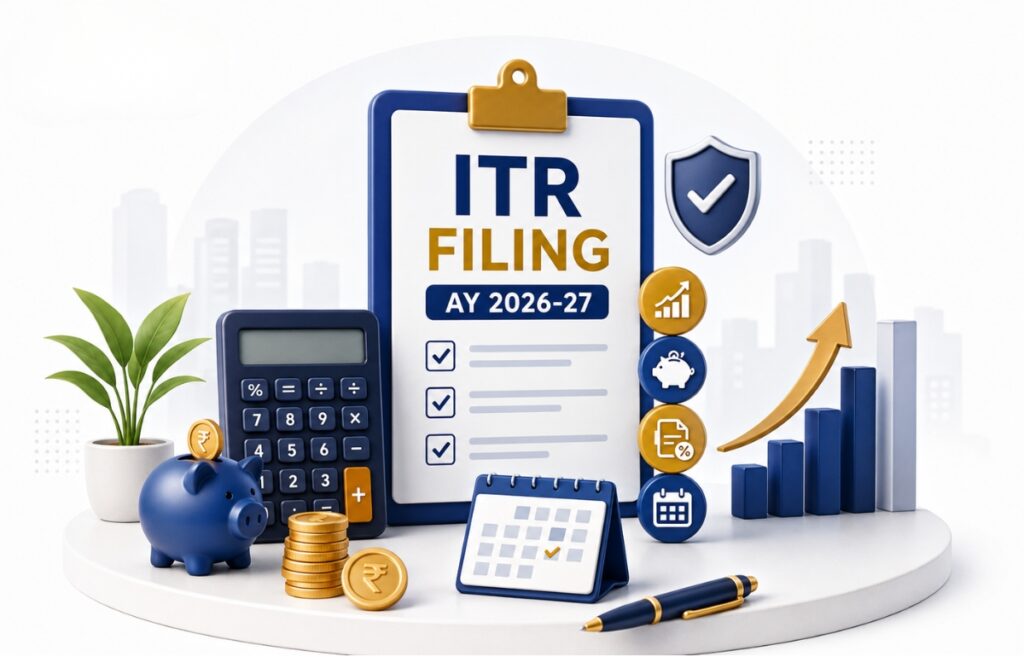
ITR Filing AY 2026-27: Complete Guide to Deductions and Exemptions Under Old and New Tax Regime The Income Tax Return (ITR) filing season for Assessment Year (AY) 2026-27 has begun, making it essential for taxpayers to understand the deductions and exemptions available before filing their returns. Selecting the right tax regime can significantly impact your overall tax liability and help you save more legally. The Government allows taxpayers to choose between the Old Tax Regime and the New Tax Regime. While the old regime offers several deductions and exemptions, the new regime provides lower tax rates with fewer tax-saving benefits. At Nvedya Professionals LLP, we help individuals, salaried employees, professionals, and business owners choose the most suitable tax regime and ensure accurate ITR filing. Why ITR Filing AY 2026-27 Is Important Timely ITR Filing AY 2026-27 is important for maintaining tax compliance and avoiding unnecessary penalties. Filing your return correctly also helps when applying for loans, visas, government tenders, and financial documentation. Proper tax planning before filing ensures that eligible deductions are not missed and taxable income is calculated accurately. Deductions Available Under the Old Tax Regime ( ITR Filing AY 2026-27 ) Taxpayers opting for the old regime can reduce taxable income through various deductions and exemptions. Section 80C Benefits Section 80C allows deductions up to the prescribed limit on eligible investments such as: Public Provident Fund (PPF) Employees’ Provident Fund (EPF) Equity Linked Savings Schemes (ELSS) National Savings Certificate (NSC) Tax-saving Fixed Deposits Life Insurance Premiums Children’s Tuition Fees Principal Repayment of Home Loan These investments continue to be among the most popular tax-saving options. Additional NPS Deduction Individuals contributing to the National Pension System (NPS) may claim an additional deduction under the applicable provisions beyond Section 80C limits. NPS remains one of the most effective long-term retirement planning options while offering tax benefits. Health Insurance Deduction Medical insurance premiums paid for self, spouse, dependent children, and parents qualify for deductions under applicable income tax provisions. Health insurance not only provides financial protection but also helps reduce taxable income. Home Loan Benefits The old tax regime offers tax benefits on both: Home loan interest Principal repayment These deductions encourage home ownership while reducing tax liability for eligible taxpayers. HRA and LTA Benefits Salaried individuals may also claim exemptions on: House Rent Allowance (HRA) Leave Travel Allowance (LTA) These exemptions are available subject to prescribed conditions. Other Important Deductions Additional deductions may also be available for: Education loan interest Donations to eligible institutions Savings account interest Senior citizen interest income Disability-related benefits These deductions can significantly reduce taxable income depending on individual eligibility. Benefits Available Under the New Tax Regime ( ITR Filing AY 2026-27 ) The New Tax Regime offers simplified taxation with lower tax rates but comparatively fewer deductions. However, taxpayers can still claim certain benefits including: Standard Deduction Employer’s NPS Contribution Eligible retirement benefits Certain family pension deductions Home loan interest for eligible let-out property cases The new regime is designed for taxpayers who prefer simplified tax calculations without multiple investment-linked deductions. Old Tax Regime vs New Tax Regime ( ITR Filing AY 2026-27 ) Choosing between both regimes depends entirely on your financial profile. The Old Tax Regime is generally suitable for taxpayers who: Invest regularly Claim HRA Have home loans Purchase health insurance Make tax-saving investments The New Tax Regime may be beneficial for taxpayers who: Prefer lower tax rates Do not claim many deductions Have simple salary structures Want easier tax calculations Careful comparison before ITR Filing AY 2026-27 can help maximize tax savings. Documents Required for ITR Filing Before filing your return, keep the following documents ready: PAN Card Aadhaar Card Form 16 Salary Slips Bank Statements Interest Certificates Investment Proofs Home Loan Statement Insurance Premium Receipts Capital Gain Statements (if applicable) Proper documentation helps ensure smooth and error-free filing. Common Mistakes to Avoid Durin ITR Filing ( Old and New Tax Regime ) Many taxpayers unintentionally make filing errors that delay refunds or trigger notices. Avoid these mistakes: Selecting the wrong tax regime Incorrect bank account details Missing eligible deductions Reporting incorrect income Ignoring Form 26AS and AIS reconciliation Filing returns after the due date Reviewing all information carefully before submission helps avoid future issues. Why Professional Tax Assistance Matters Income tax laws continue to evolve, making professional guidance valuable for both individuals and businesses. At Nvedya Professionals LLP, we assist clients with: Income Tax Return Filing Tax Planning Old vs New Tax Regime Comparison Tax Compliance Business Tax Advisory GST and Financial Compliance Our experienced professionals help taxpayers maximize eligible deductions while ensuring complete compliance. Conclusion ITR Filing AY 2026-27 is more than just a legal obligation—it is an opportunity to optimize your tax savings through proper planning and informed decision-making. Understanding the deductions and exemptions available under both the old and new tax regimes allows taxpayers to choose the most beneficial option based on their financial situation. With expert guidance from Nvedya Professionals LLP, individuals and businesses can complete their income tax filing confidently, accurately, and in full compliance with current tax regulations. Media Contact Nvedya Professionals LLP📞 Phone: +91 62620 03030 📧 Email: info@nvedya.in 🌐 Website: www.nvedya.in Follow us: Instagram | LinkedIn | Facebook
Why Every Business Needs Professional Accounting Services

Why Every Business Needs Professional Accounting Services Managing a business successfully requires more than generating sales and serving customers. Every business, regardless of its size, must maintain accurate financial records, comply with tax regulations, and make informed financial decisions. This is where Accounting Services become essential. Professional Accounting Services help businesses organize financial data, improve cash flow management, ensure statutory compliance, and support long-term growth. Whether you are a startup, MSME, partnership firm, or private limited company, having expert accounting support reduces financial risks and allows business owners to focus on growth. At Nvedya Professionals LLP, businesses receive comprehensive accounting, taxation, bookkeeping, and compliance solutions designed to improve financial efficiency and regulatory compliance. What Are Accounting Services? Accounting Services refer to professional financial management solutions that help businesses record, organize, analyze, and report financial transactions accurately. These services provide business owners with reliable financial information required for strategic planning and regulatory compliance. Professional accounting generally includes: Bookkeeping Financial reporting GST compliance Tax planning Payroll management Financial statement preparation Business advisory Strong accounting practices form the foundation of every successful business. Why Accounting Services Are Important for Every Business Business owners make financial decisions every day. Without accurate financial information, these decisions may increase operational and financial risks. Professional Accounting Services help businesses: Maintain accurate financial records Improve financial transparency Support better decision-making Ensure tax compliance Monitor business performance Reliable financial information enables companies to grow with confidence. 1. Accurate Bookkeeping Improves Financial Control Bookkeeping is the backbone of business accounting. Recording every financial transaction correctly helps businesses understand their actual financial position. Accurate bookkeeping supports: Better expense tracking Cash flow monitoring Budget management Financial reporting Audit readiness Professional accounting reduces errors that may affect business performance. 2. Accounting Services Simplify GST Compliance GST regulations continue to evolve, making compliance increasingly important for businesses. Professional Accounting Service help organizations: Maintain GST records File GST returns on time Manage Input Tax Credit Prepare tax documentation Reduce compliance risks Timely compliance helps businesses avoid penalties and maintain operational continuity. 3. Better Financial Planning and Budgeting Business growth depends on proper financial planning. Professional accountants analyze financial reports and help businesses allocate resources more effectively. Financial planning supports: Revenue forecasting Cost control Investment decisions Expansion planning Profitability analysis Proper planning allows businesses to achieve sustainable long-term growth. 4. Tax Planning Becomes More Efficient Tax planning is an essential component of business management. Businesses that plan taxes effectively remain compliant while optimizing financial resources. Professional accountants help with: Income tax planning Advance tax calculations Tax return filing Regulatory compliance Financial documentation Strategic tax planning reduces financial uncertainty and improves business stability. 5. Professional Accounting Services Improve Cash Flow Management Many profitable businesses struggle because of poor cash flow management rather than low revenue. Professional Accounting Service help businesses: Track incoming payments Monitor expenses Improve working capital Identify cash shortages Maintain financial stability Healthy cash flow allows businesses to operate efficiently and invest confidently. 6. Financial Statements Support Better Decisions Accurate financial statements provide valuable insights into business performance. Important reports include: Profit and Loss Statement Balance Sheet Cash Flow Statement These reports help business owners evaluate profitability, manage liabilities, and plan future investments. 7. Accounting Services Help During Business Expansion As businesses grow, financial operations become more complex. Expansion often requires stronger accounting systems, compliance management, and financial reporting. Professional Accounting Services support: Branch expansion Investor reporting Loan applications Business valuation Financial due diligence Proper accounting makes business growth more organized and sustainable. Why Small Businesses Should Hire Professional Accountants Many small business owners attempt to manage accounts independently, but increasing compliance requirements often make professional support necessary. Professional accounting offers: Greater accuracy Time savings Reduced financial risks Better compliance Improved financial insights Outsourcing accounting also allows entrepreneurs to focus on business development instead of administrative tasks. Why Choose Nvedya Professionals LLP At Nvedya Professionals LLP, businesses receive end-to-end financial support through experienced professionals who understand modern accounting and compliance requirements. Our services include: Accounting & Bookkeeping GST Registration & Filing Income Tax Compliance Financial Statement Preparation Payroll Services Business Advisory Regulatory Compliance Our objective is to help businesses maintain financial discipline while supporting sustainable growth. Conclusion Professional Accounting Services are no longer optional—they are essential for every business aiming for long-term success. From accurate bookkeeping and GST compliance to tax planning, financial reporting, and strategic decision-making, professional accounting creates a strong financial foundation. Whether you are launching a startup or expanding an established business, expert accounting support helps reduce risks, improve compliance, and strengthen financial performance. With trusted guidance from Nvedya Professionals LLP, businesses can focus on growth while maintaining complete financial confidence. Media Contact Nvedya Professionals LLP📞 Phone: +91 62620 03030 📧 Email: info@nvedya.in 🌐 Website: www.nvedya.in Follow us: Instagram | LinkedIn | Facebook
Business Expansion Checklist for Indian Companies

Business Expansion Checklist for Indian Companies Growing a business is an exciting milestone, but expansion requires much more than increasing sales or opening new locations. Every successful business expansion begins with proper planning, financial readiness, legal compliance, and strategic decision-making. Whether you are entering a new market, launching a new product, hiring more employees, or establishing another branch, following a structured checklist can reduce risks and improve long-term success. In India, companies must also consider regulatory requirements, taxation, accounting, and compliance before taking the next growth step. A well-planned business expansion strategy helps organizations improve operational efficiency, maintain compliance, and achieve sustainable growth. At Nvedya Professionals LLP, businesses receive professional advisory services that support expansion planning, compliance management, taxation, and financial decision-making. Why Business Expansion Requires Careful Planning Many businesses grow rapidly but fail to sustain that growth because expansion decisions are made without proper preparation. A successful business expansion should be supported by financial analysis, market research, operational planning, and legal compliance. Proper planning helps businesses: Reduce financial risks Improve operational efficiency Maintain regulatory compliance Allocate resources effectively Achieve sustainable growth Expansion should always be based on long-term business objectives rather than short-term opportunities. 1. Evaluate Financial Readiness Before expanding, businesses should carefully evaluate their financial position. Expansion often requires significant investment in infrastructure, staffing, marketing, and technology. Review: Cash flow Working capital Profitability Existing liabilities Investment requirements Financial assessment is one of the most important steps in every business expansion plan. 2. Conduct Detailed Market Research Understanding customer demand and market conditions helps businesses make informed expansion decisions. Market research should include: Target audience analysis Competitor research Industry trends Pricing strategies Regional demand Reliable research minimizes uncertainty and improves expansion success. 3. Ensure Legal and Regulatory Compliance Indian businesses must comply with several legal and regulatory requirements before expanding operations. Review compliance related to: Company registrations GST obligations Licenses and permits Labour laws Contract documentation Maintaining compliance protects businesses from unnecessary legal complications. 4. Strengthen Accounting and Financial Reporting As operations grow, financial transactions become more complex. Proper bookkeeping and financial reporting become even more important during business expansion. Businesses should maintain: Updated accounting records Financial statements Cash flow reports Budget planning Expense monitoring Accurate financial reporting supports better decision-making and investor confidence. 5. Review Tax Planning and GST Compliance Expansion often changes tax obligations. Businesses should evaluate GST registration requirements, Input Tax Credit eligibility, and tax planning strategies before entering new markets. Professional tax planning helps businesses: Improve compliance Reduce tax risks Maintain accurate reporting Avoid penalties Proper GST planning is an important part of successful business growth. 6. Build the Right Team A growing business needs capable people to support new operations. Hiring qualified professionals and providing employee training strengthens operational efficiency. Focus on: Recruitment planning Employee development Leadership building HR compliance A skilled workforce supports long-term organizational success. 7. Invest in Technology Technology improves productivity and simplifies business operations. During business expansion, businesses should evaluate software and digital tools that improve efficiency. Examples include: Accounting software CRM systems Inventory management Payroll software Business analytics Digital transformation helps businesses scale more effectively. 8. Manage Business Risks Expansion introduces new financial and operational risks. Businesses should identify potential challenges before implementing growth strategies. Risk assessment should include: Financial risks Market risks Operational risks Compliance risks Cybersecurity risks Proactive risk management strengthens long-term business stability. 9. Develop a Long-Term Growth Strategy Expansion should align with the company’s long-term vision rather than focusing only on immediate revenue. An effective business expansion strategy should define: Growth objectives Investment priorities Performance indicators Resource allocation Future scalability Strategic planning creates sustainable business growth. 10. Seek Professional Business Advisory Support Expansion decisions involve taxation, accounting, legal compliance, financial planning, and regulatory requirements. Professional advisory services help businesses manage these responsibilities efficiently. At Nvedya Professionals LLP, businesses receive comprehensive support for: Business advisory GST compliance Accounting and bookkeeping Tax planning Financial reporting Regulatory compliance Professional guidance enables businesses to expand confidently while minimizing operational and compliance risks. Common Mistakes Businesses Should Avoid Many companies face difficulties because they: Expand without market research Ignore compliance obligations Underestimate financial requirements Delay accounting updates Neglect tax planning Avoiding these mistakes significantly improves the success rate of expansion projects. Conclusion A successful business expansion requires careful planning, financial discipline, regulatory compliance, and strategic execution. Businesses that follow a structured checklist are better prepared to manage risks, improve operational efficiency, and achieve sustainable growth. By evaluating financial readiness, maintaining compliance, strengthening accounting systems, and seeking professional guidance, Indian companies can confidently pursue expansion opportunities while building long-term business success. Nvedya Professionals LLP remains committed to helping businesses grow through expert advisory, taxation, accounting, and compliance solutions. Media Contact Nvedya Professionals LLP📞 Phone: +91 62620 03030 📧 Email: info@nvedya.in 🌐 Website: www.nvedya.in Follow us: Instagram | LinkedIn | Facebook
GST Compliance Checklist for Small Businesses in 2026
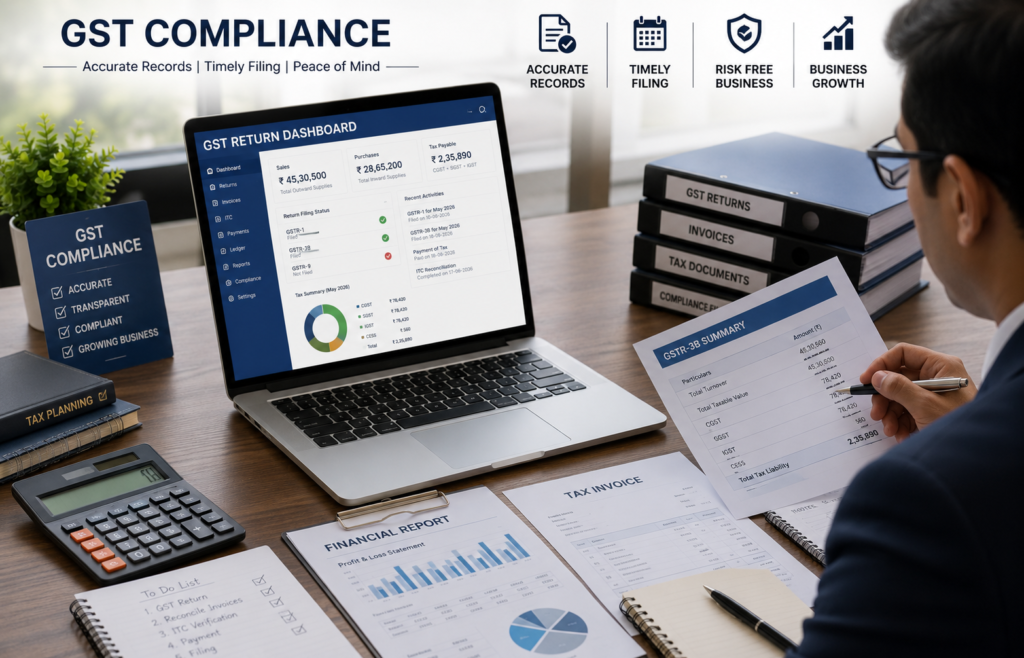
GST Compliance Checklist for Small Businesses in 2026 Running a small business involves managing sales, operations, customers, and finances efficiently. However, one area that often creates challenges for business owners is taxation and regulatory compliance. As GST regulations continue to evolve, maintaining proper GST Compliance has become more important than ever in 2026. Failure to meet GST requirements can lead to penalties, notices, blocked Input Tax Credit (ITC), and unnecessary legal complications. For small businesses, staying compliant is not only about avoiding penalties but also about building credibility, maintaining financial transparency, and ensuring smooth business operations. At Nvedya Professionals LLP, businesses receive professional guidance to simplify it and stay updated with changing tax regulations. Why GST Compliance Is Important for Small Businesses GST has transformed India’s indirect tax system by creating a unified tax structure. While the system offers numerous benefits, it also requires businesses to maintain accurate records and fulfill various compliance obligations. It helps businesses: Avoid penalties and notices Claim Input Tax Credit correctly Maintain financial transparency Improve business credibility Ensure smooth tax filing processes For growing businesses, GST compliance also supports better financial management and long-term sustainability. GST Compliance Checklist for 2026 To help business owners stay organized, here is a practical GST Compliance checklist for 2026. 1. Verify GST Registration Status The first step in maintaining Compliance is ensuring that your GST registration details are accurate and up to date. Businesses should regularly verify: GSTIN details Business address information Contact details Authorized signatory information Updated registration records help prevent compliance-related issues and communication delays. 2. Maintain Proper Tax Invoices Accurate invoicing is a fundamental requirement under GST regulations. Businesses must ensure that every invoice contains mandatory information as prescribed under GST laws. Important invoice details include: GSTIN number Invoice number Invoice date Customer details Taxable value GST rates and tax amount Proper invoicing supports smooth GST compliance and reduces the risk of reporting errors. 3. File GST Returns on Time Timely return filing remains one of the most important aspects of compliance. Delayed filing can result in late fees, interest liabilities, and compliance notices. Small businesses should maintain a calendar for: GSTR-1 GSTR-3B Annual returns (if applicable) Other applicable GST filings Consistent filing helps businesses avoid unnecessary penalties. 4. Reconcile Sales and Purchase Records Regular reconciliation helps identify mismatches before they become major compliance issues. Businesses should compare: Sales records Purchase records GST returns Accounting entries Accurate reconciliation strengthens Compliance and improves financial reporting accuracy. 5. Verify Input Tax Credit Claims Input Tax Credit is one of the most valuable benefits under GST. However, incorrect claims can trigger notices and disputes. Before claiming ITC, businesses should: Verify supplier GST filings Match invoices properly Maintain supporting documentation Review vendor compliance status Proper verification helps ensure smooth Compliance and protects tax benefits. 6. Monitor Vendor Compliance A business’s GST position can be affected by the compliance status of its suppliers. Businesses should regularly review whether vendors are filing GST returns accurately and on time. Monitoring vendor compliance helps: Reduce ITC-related risks Improve reconciliation accuracy Avoid future disputes This has become increasingly important as GST systems continue to become more data-driven. 7. Maintain Accurate Accounting Records Strong accounting practices are essential for successful GST. Businesses should maintain updated records of: Sales transactions Purchase invoices Expense records Tax payments Bank transactions Accurate bookkeeping simplifies GST filing and supports better financial management. 8. Use Digital Compliance Tools Technology is becoming an important part of GST administration. Businesses can improve efficiency by using: Accounting software GST filing platforms Invoice management systems Automated reconciliation tools Digital systems reduce manual errors and strengthen overall compliance processes. 9. Stay Updated with GST Changes GST regulations and compliance requirements continue to evolve. Small business owners should stay informed about: New GST notifications Tax rate changes Filing requirements ITC rules E-invoicing updates 10. Seek Professional GST Guidance Many compliance issues occur because business owners are unaware of changing regulations or reporting requirements. Professional assistance helps businesses manage GST responsibilities efficiently. At Nvedya Professionals LLP, businesses receive support for: GST registration GST return filing ITC management GST audits Compliance advisory Professional guidance reduces risks and ensures timely compliance. Common Mistakes Small Businesses Should Avoid Many small businesses face compliance challenges due to avoidable mistakes such as: Delayed GST return filingIncorrect invoice preparationImproper ITC claimsPoor bookkeepingFailure to reconcile records. The Future of GST Compliance in India As technology continues to transform tax administration, GST systems are becoming more automated, transparent, and data-driven. Businesses that maintain organized records and proactive compliance practices will find it easier to adapt to future regulatory requirements. Preparing today for evolving GST regulations can help businesses remain compliant, competitive, and financially stable. Conclusion Maintaining GST Compliance is essential for every small business operating in India. From registration and invoicing to return filing and Input Tax Credit management, every aspect of compliance contributes to smoother business operations and reduced regulatory risks. By following a structured compliance checklist, staying informed about regulatory changes, and seeking professional guidance when necessary, small businesses can confidently manage their GST responsibilities in 2026 and beyond. Media Contact Nvedya Professionals LLP📞 Phone: +91 62620 03030 📧 Email: info@nvedya.in 🌐 Website: www.nvedya.in Follow us: Instagram | LinkedIn | Facebook
Financial Statements Every Business Owner Must Understand

Financial Statements Every Business Owner Must Understand Running a successful business requires more than generating sales and managing daily operations. Business owners must also understand their financial performance to make informed decisions and achieve sustainable growth. This is where the financial statement plays a crucial role. Financial statements provide a clear picture of a company’s financial health, helping business owners evaluate profitability, cash flow, assets, liabilities, and overall business performance. Whether you operate a startup, SME, or established enterprise, understanding financial statements is essential for effective financial management and long-term success. At Nvedya Professionals LLP, businesses are guided in maintaining accurate financial records and interpreting financial data to support smarter decision-making and regulatory compliance. What Are Financial Statements? Financial statements are formal financial reports that summarize a business’s financial activities over a specific period. These reports help business owners, investors, lenders, and stakeholders understand the financial condition of a company. The primary purpose of financial statements is to provide reliable information about: Business income and expenses Profitability Cash flow position Assets and liabilities Financial performance Business growth trends Strong financial reporting helps organizations maintain transparency and improve financial planning. Why Financial Statements Are Important for Business Owners Many business owners focus on revenue while overlooking critical financial data. However, financial statement provide valuable insights that help businesses make informed strategic decisions. Properly maintained financial statement help business owners: Monitor financial performance Identify profit opportunities Control expenses Manage cash flow effectively Support business expansion Improve investor and lender confidence Understanding these reports enables business owners to respond proactively to financial challenges and opportunities. 1. Income Statement (Profit and Loss Statement) One of the most important financial statement is the income statement, commonly known as the profit and loss (P&L) statement. This report shows: Revenue earned Business expenses Gross profit Net profit or loss The income statement helps business owners determine whether their operations are profitable over a specific period. By reviewing this statement regularly, businesses can identify areas where costs can be reduced and profitability improved. 2. Balance Sheet The balance sheet is another essential financial statement that provides a snapshot of a company’s financial position at a specific point in time. A balance sheet includes: Assets Resources owned by the business, such as Cash Inventory Equipment Property Liabilities Financial obligations, including: Loans Outstanding payments Business debts Equity The owner’s financial interest in the business. The balance sheet helps business owners understand what the company owns, what it owes, and its overall net worth. 3. Cash Flow Statement Among all financial statement, the Cash Flow Statement is critical because it tracks the movement of cash into and out of the business. This statement covers: Operating activities Investing activities Financing activities Even profitable businesses can face financial difficulties if cash flow is not managed properly. Monitoring cash flow helps ensure sufficient funds are available for daily operations, expansion plans, and financial obligations. How Financial Statement Support Better Decision-Making Accurate financial statement provide business owners with reliable information for strategic planning and operational improvements. They help answer important questions such as: Is the business profitable? Are expenses under control? Is cash flow sufficient? Can the business afford expansion? Are debts being managed effectively? These insights allow business owners to make data-driven decisions rather than relying on assumptions. Financial Statement and Business Compliance Financial reporting is not only important for management but also for regulatory compliance. Proper financial statement support: Income tax filing GST compliance Statutory audits Loan applications Investor reporting Incomplete or inaccurate financial records can lead to compliance issues, penalties, and financial risks. At Nvedya Professionals LLP, businesses receive professional support in maintaining compliant financial records and preparing accurate financial statements. Common Mistakes Business Owners Make Many businesses fail to maximize the value of financial statement because they: Review reports infrequently Ignore cash flow analysis Focus only on revenue Maintain incomplete accounting records Delay bookkeeping activities Regular financial review helps businesses identify issues early and improve overall financial performance. The Role of Professional Accounting Support Preparing and interpreting financial statement requires accuracy and financial expertise. Professional accounting support helps businesses maintain organized records and gain meaningful insights from financial data. Expert guidance can help with: Bookkeeping Financial reporting Tax planning Compliance management Business performance analysis Professional support ensures that financial statements remain accurate, timely, and useful for decision-making. Conclusion Understanding financial statements is essential for every business owner who wants to build a financially strong and sustainable business. Income statements, balance sheets, and cash flow statements provide valuable insights into profitability, financial health, and operational efficiency. By regularly reviewing financial statements and maintaining accurate records, businesses can improve decision-making, strengthen compliance, and support long-term growth. With professional guidance from Nvedya Professionals LLP, businesses can confidently manage their financial reporting and focus on achieving their strategic goals. Media Contact Nvedya Professionals LLP 📧 Email: contact@nvedya.in 🌐 Website: www.nvedya.in Follow us on: Facebook | Instagram | LinkedIn
Big GST Changes Every Business Owner Must Know in 2026
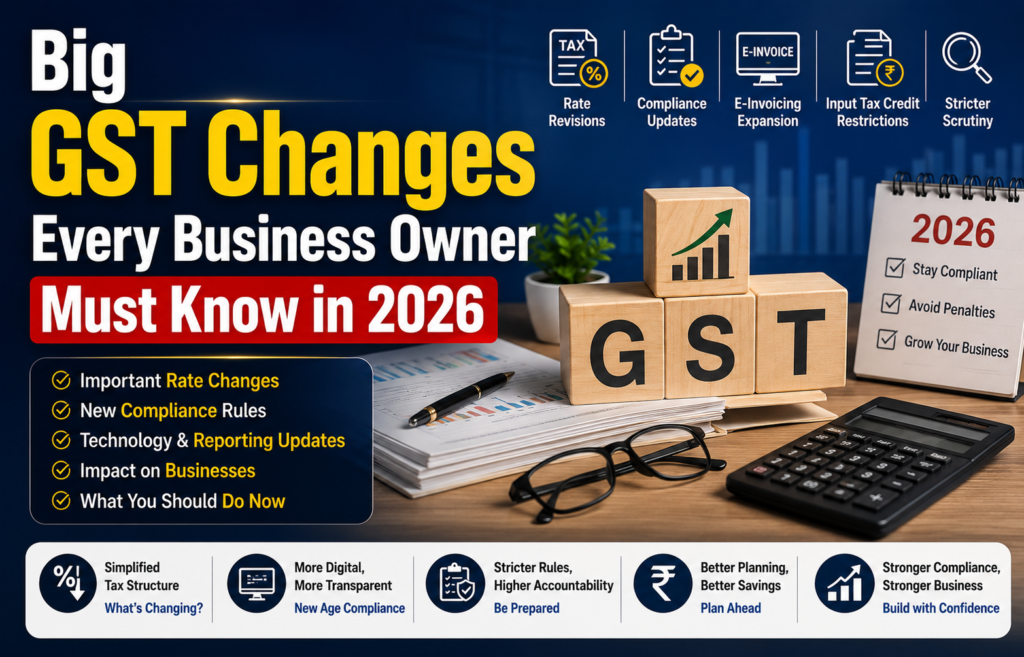
Big GST Changes Every Business Owner Must Know in 2026 The GST framework in India continues to evolve as the government introduces new compliance measures, digital systems, and regulatory improvements to strengthen tax administration. In 2026, several big GST changes are expected to impact businesses, startups, SMEs, and professionals across different sectors. For business owners, staying updated with GST regulations is extremely important to avoid penalties, maintain proper compliance, and improve financial management. As tax systems become more technology-driven and compliance-focused, businesses must adapt quickly to changing GST requirements. At Nvedya Professionals LLP, GST advisory and compliance support help businesses understand regulatory updates and manage tax responsibilities more efficiently. Why Businesses Must Understand Big GST Changes GST compliance is no longer limited to simple return filing. The introduction of automation, digital verification systems, stricter reporting standards, and real-time data tracking is making GST compliance more detailed and structured. These big GST changes are designed to: Improve tax transparency Reduce fake invoicing Increase compliance accuracy Strengthen digital tax systems Simplify long-term tax administration Businesses that fail to stay updated with these changes may face compliance risks, notices, penalties, or operational difficulties. Increased Focus on Digital GST Compliance One of the biggest GST changes in 2026 is the growing shift toward digital compliance systems. GST authorities are increasingly using automated tracking, invoice matching, and AI-driven verification to identify irregularities and improve tax monitoring. Businesses are now expected to maintain: Accurate invoice records Timely GST return filing Proper reconciliation of transactions Correct Input Tax Credit claims Digital compliance accuracy is becoming more important than ever for avoiding GST-related disputes and notices. Stricter Input Tax Credit Verification Input Tax Credit (ITC) remains one of the most sensitive areas under GST compliance. In 2026, businesses are expected to face stricter verification and reconciliation requirements for claiming ITC benefits. These big GST changes may require businesses to: Verify supplier compliance regularly Match invoices carefully Maintain accurate purchase records Monitor GST filing status of vendors Incorrect ITC claims may lead to penalties, blocked credits, or compliance notices. E-Invoicing and Automation Expansion The government continues expanding e-invoicing requirements for businesses across different turnover categories. Automation in invoicing and return filing is becoming a central part of the GST ecosystem. Big GST changes related to e-invoicing are expected to improve: Invoice transparency Real-time reporting Tax tracking accuracy Fraud prevention systems Businesses using manual invoicing systems may need to upgrade their accounting and billing processes to remain compliant. Greater Compliance Monitoring for Small Businesses Small businesses and startups are also expected to experience tighter GST monitoring in 2026. Authorities are focusing more on identifying filing mismatches, delayed returns, and incorrect tax reporting. To manage these big GST changes effectively, businesses should focus on: Timely GST return filing Regular bookkeeping updates Accurate accounting records Professional tax advisory support Proper compliance systems help businesses avoid unnecessary legal and financial complications. GST Changes Are Increasing the Importance of Proper Accounting As GST regulations become more data-driven, proper accounting and bookkeeping are becoming essential for smooth compliance management. Businesses with weak accounting systems often face: GST reconciliation issues Incorrect tax filings Delayed compliance Financial reporting errors Strong accounting practices support accurate GST reporting and reduce compliance risks significantly. Why Professional GST Guidance Is Becoming Important Many business owners struggle to keep up with changing GST regulations while simultaneously managing operations and growth. Professional GST guidance helps businesses understand compliance requirements and avoid costly mistakes. At Nvedya Professionals LLP, GST compliance services support businesses through: GST registration Return filing Input Tax Credit management Compliance monitoring Tax advisory and planning Professional support helps businesses remain compliant while improving operational efficiency. How Businesses Can Prepare for Big GST Changes Businesses can prepare for changing GST regulations by adopting proactive compliance practices, including: Maintaining updated accounting systems Conducting regular GST reconciliations Using digital invoicing solutions Monitoring vendor compliance Seeking professional tax advisory support Early preparation reduces compliance risks and improves financial transparency. The Future of GST Compliance in India The GST system in India is gradually moving toward greater automation, transparency, and digital integration. Future GST compliance is expected to rely heavily on technology-driven verification systems and real-time reporting. Businesses that adapt early to these big GST changes will likely benefit from smoother operations, reduced compliance risks, and stronger financial management. Conclusion The big GST changes in 2026 are expected to significantly impact businesses across India. Increased digital monitoring, stricter Input Tax Credit verification, expanding e-invoicing requirements, and stronger compliance systems are making GST management more structured than ever before. For business owners, staying informed and maintaining accurate compliance practices is essential for avoiding penalties and supporting long-term business growth. With proper accounting systems and professional guidance, businesses can adapt successfully to changing GST regulations and maintain stronger financial stability. Media Contact Nvedya Professionals LLP 📧 Email: contact@nvedya.in 🌐 Website: www.nvedya.in Follow us on: Facebook | Instagram | LinkedIn
Why Financial Literacy Is More Important Than Ever in 2026

Why Financial Literacy Is More Important Than Ever in 2026 Managing money wisely has become one of the most important life skills in today’s rapidly changing economy. Rising inflation, digital banking, online investments, increasing financial products, and changing market conditions are making financial decisions more complex than ever before. This is why financial literacy is becoming essential for individuals and families in 2026. People with strong financial knowledge are generally better prepared to manage expenses, avoid unnecessary debt, make informed investment decisions, and plan for future financial stability. Without proper understanding of money management, many individuals struggle financially despite having stable incomes. At Nvedya Professionals LLP, spreading financial awareness and encouraging structured financial planning are considered important steps toward long-term financial growth and stability. What Is Financial Literacy? It refers to the ability to understand and effectively manage personal finances. It includes knowledge related to budgeting, savings, investments, taxation, insurance, and debt management. Strong financial literacy helps individuals: Control spending habits Improve saving discipline Make smarter investment decisions Manage debt responsibly Build long-term financial security Understanding these financial concepts allows people to make better financial decisions throughout different stages of life. Why Financial Literacy Matters More in 2026 The financial world is evolving rapidly because of digital transactions, online banking, and growing investment opportunities. As financial systems become more advanced, this is becoming increasingly important for handling everyday financial responsibilities. In 2026, individuals must understand how to: Manage rising living costs Protect themselves from financial scams Use digital banking safely Build emergency savings Plan long-term investments Without this, people may struggle to maintain financial stability in an increasingly complex financial environment. Better Financial Literacy Improves Money Management One of the biggest advantages of financial literacy is improved money management. Many individuals face financial stress not because they earn too little, but because they lack budgeting discipline and financial planning. Good money management habits include: Tracking expenses regularly Creating monthly budgets Saving before spending Avoiding unnecessary expenses These habits help individuals maintain stronger control over their finances and improve long-term financial stability. Financial Literacy Helps Avoid Debt Problems Poor debt management is a common financial challenge for many families. Credit cards, loans, and EMIs can become difficult to manage when borrowing decisions are made without proper planning. It helps people: Understand loan costs and interest rates Avoid unnecessary borrowing Improve repayment discipline Reduce financial stress caused by debt Responsible borrowing and financial planning support healthier long-term financial stability. Why Financial Literacy Encourages Smarter Investments Investment opportunities are expanding rapidly in 2026, but many individuals still avoid investing because of fear or lack of financial understanding.this helps people understand how investments work and why long-term investing is important. Common investment options include: Mutual funds and SIPs Equity investments Retirement plans Diversified portfolios Instead of depending only on traditional savings methods, financially aware individuals can create stronger wealth-building strategies through disciplined investing. Digital Financial Awareness Is Becoming Essential Modern financial management now depends heavily on digital platforms. Online banking, UPI transactions, investment apps, and digital payments require people to understand safe financial practices. It also includes: Understanding cyber fraud risks Protecting financial information Using digital banking securely Identifying online scams As digital financial activity increases, awareness about financial safety is becoming more important than ever. Financial Literacy Supports Long-Term Financial Growth Long-term financial growth is not only about earning higher income. It also depends on how effectively people save, invest, budget, and manage risks over time. This supports long-term growth by encouraging: Disciplined saving habits Consistent investing Strategic financial planning Better financial decision-making People with strong financial awareness are generally more prepared for future opportunities and unexpected financial challenges. Importance of Professional Financial Guidance Financial planning can often become complicated because of changing tax laws, inflation, market fluctuations, and investment options. Professional financial guidance helps individuals make informed decisions aligned with long-term goals. At Nvedya Professionals LLP, advisory and compliance services help individuals and businesses improve financial planning strategies, strengthen financial awareness, and build long-term financial stability. Conclusion In 2026, financial literacy is becoming more important than ever because financial decisions now directly impact long-term stability, investments, savings, and wealth creation. Individuals who understand budgeting, investing, debt management, and financial planning are better prepared to handle modern financial challenges. By improving this, people can make smarter financial decisions, reduce financial stress, and create stronger long-term financial security for themselves and their families. Media Contact Nvedya Professionals LLP 📧 Email: contact@nvedya.in 🌐 Website: www.nvedya.in Follow us on: Facebook | Instagram | LinkedIn
The Hidden Financial Mistakes Keeping Middle-Class Families Poor

The Hidden Financial Mistakes Keeping Middle-Class Families Poor Many middle-class families work hard, earn stable incomes, and try to save regularly, yet financial stress continues to remain a constant challenge. One major reason behind this situation is the presence of hidden financial mistakes that slowly affect long-term wealth creation and financial stability. These mistakes are often ignored because they appear normal in everyday life. However, over time, poor financial habits, lack of planning, unnecessary debt, and emotional spending can prevent families from building real financial security. At Nvedya Professionals LLP, financial awareness and structured money management are considered essential for helping families make smarter long-term financial decisions. Why Hidden Financial Mistakes Are So Dangerous The biggest problem with hidden financial mistakes is that they often go unnoticed for years. Unlike sudden financial losses, these mistakes slowly reduce savings, increase debt, and limit wealth-building opportunities. Many middle-class families believe financial struggles are caused only by low income. In reality, hidden financial mistakes related to spending habits, investment planning, and money management often create long-term financial pressure even for people with decent earnings. Understanding these financial mistakes is the first step toward achieving better financial stability. 1. Living Without a Financial Plan One of the most common hidden financial mistakes is managing money without a proper financial plan. Many families earn and spend monthly income without setting clear financial goals for savings, investments, emergency funds, or retirement planning. Without financial planning: Expenses increase uncontrollably Savings remain inconsistent Debt becomes difficult to manage Long-term goals get delayed A structured financial plan helps families control spending and build long-term financial security. 2. Depending Completely on Active Income Another hidden financial mistake is relying entirely on salary income without building additional income sources. Many families spend their entire earnings on monthly expenses without investing for future growth. Financial stability improves when people gradually create passive income opportunities through: Investments SIPs and mutual funds Rental income Long-term assets Retirement planning Depending only on active income increases financial risk during emergencies, inflation, or economic uncertainty. 3. Lifestyle Inflation Is Reducing Savings As income increases, many people increase their lifestyle expenses at the same pace. This hidden financial mistake prevents families from building wealth despite earning more over time. Lifestyle inflation may include: Unnecessary luxury spending Expensive gadgets and vehicles Overspending on social status Frequent impulse purchases Instead of increasing investments and savings first, many families prioritize lifestyle upgrades, which weakens long-term financial growth. 4. Ignoring Emergency Funds Ignoring emergency savings is another major hidden financial mistake affecting middle-class families. Medical emergencies, job loss, repairs, or sudden expenses can create serious financial pressure if families are unprepared. Experts generally recommend maintaining: Three to six months of living expenses Easily accessible emergency savings Separate emergency financial reserves Without emergency funds, families often depend on loans or credit cards during difficult situations. 5. Poor Debt Management Debt itself is not always harmful, but poor debt management becomes one of the biggest hidden financial mistakes when borrowing is uncontrolled. Common debt-related issues include: Excessive credit card usage Personal loans for lifestyle spending EMI overload Borrowing without repayment planning High-interest debt can slowly reduce financial stability and limit future investment opportunities. 6. Avoiding Investments Due to Fear Many middle-class families save money regularly but avoid investing because of fear, lack of knowledge, or risk concerns. This hidden financial mistake limits long-term wealth creation because savings alone often fail to beat inflation. Financial growth usually requires disciplined long-term investing through options such as: Mutual funds SIP investments Retirement plans Diversified investment portfolios Avoiding investments completely may result in slow financial growth over time. 7. Lack of Financial Awareness Financial awareness plays a major role in building wealth. Unfortunately, lack of financial education remains one of the biggest hidden financial mistakes affecting many households. Without proper financial awareness, people may struggle with: Budgeting Tax planning Investment decisions Insurance understanding Retirement planning Improving financial knowledge helps families make smarter decisions and avoid unnecessary financial losses. Why Financial Discipline Matters More Than Income Many financially stable individuals are not necessarily high earners. In most cases, they simply avoid hidden financial mistakes and follow disciplined financial habits consistently. Financial discipline includes: Budgeting regularly Saving before spending Investing consistently Managing debt responsibly Planning long-term goals Over time, these habits create stronger financial security and wealth stability. How Middle-Class Families Can Improve Financial Stability Avoiding hidden financial mistakes requires gradual behavioral and financial changes rather than sudden drastic actions. Families can improve financial health by: Creating monthly budgets Tracking expenses Building emergency funds Reducing unnecessary debt Starting long-term investments Improving financial awareness Even small financial improvements practiced consistently can create major long-term benefits. The Importance of Professional Financial Guidance Financial planning can often feel complicated because of changing markets, taxes, inflation, and investment options. Professional financial guidance helps families create structured plans aligned with long-term goals. At Nvedya Professionals LLP, financial advisory and compliance support help individuals and businesses make informed financial decisions that support stability, growth, and long-term financial security. Conclusion Many middle-class families struggle financially not because they lack income, but because hidden financial mistakes gradually weaken their financial stability over time. Poor planning, uncontrolled spending, lack of investments, and weak financial awareness often create long-term financial pressure. By identifying and correcting these hidden financial mistakes, families can improve savings, reduce financial stress, and build stronger long-term wealth. Consistent financial discipline and informed decision-making remain the foundation of lasting financial security. Media Contact Nvedya Professionals LLP 📧 Email: contact@nvedya.in 🌐 Website: www.nvedya.in Follow us on: Facebook | Instagram | LinkedIn