
GST Compliance Checklist for Small Businesses in 2026
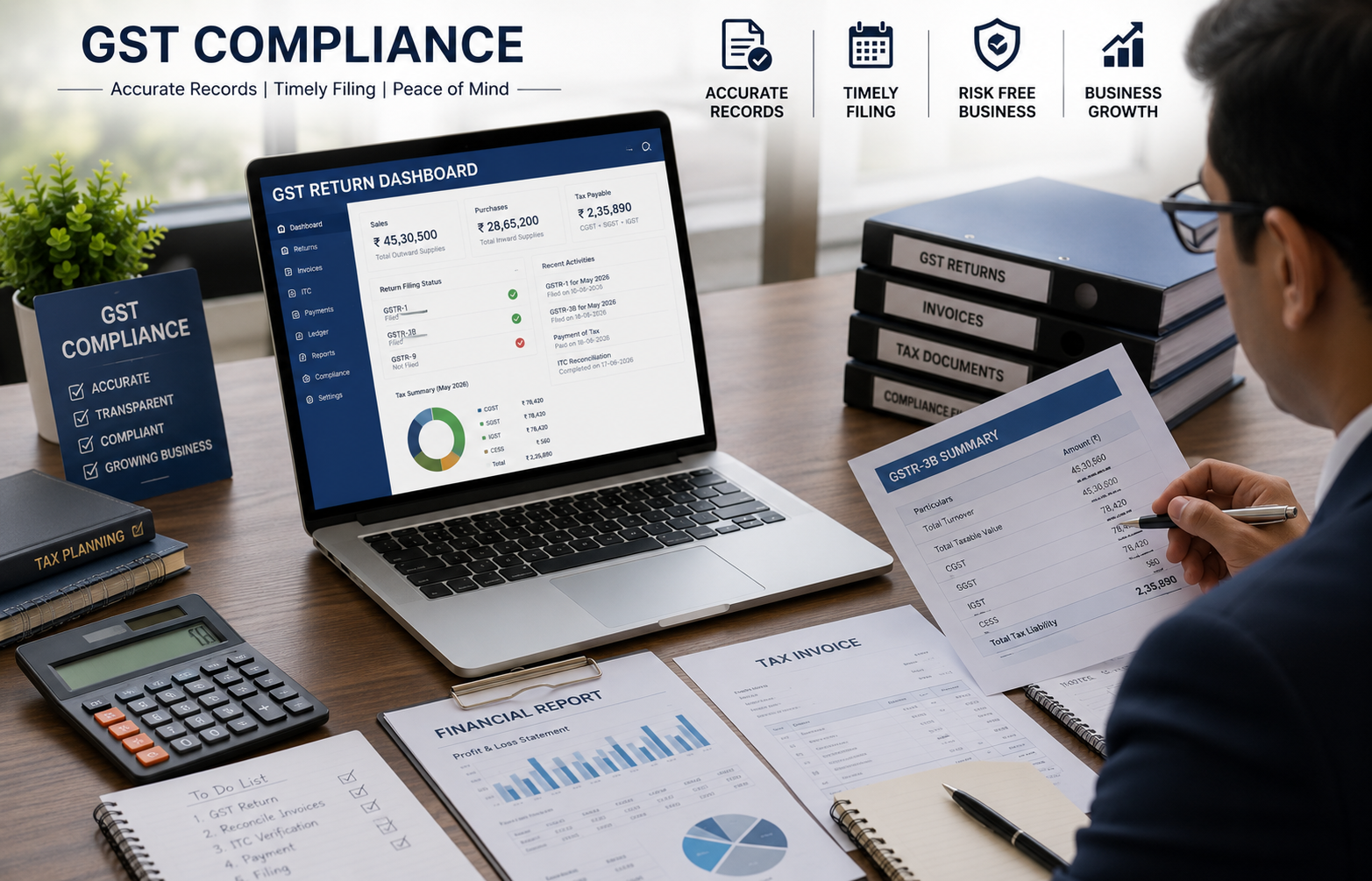
Running a small business involves managing sales, operations, customers, and finances efficiently. However, one area that often creates challenges for business owners is taxation and regulatory compliance. As GST regulations continue to evolve, maintaining proper GST Compliance has become more important than ever in 2026.
Failure to meet GST requirements can lead to penalties, notices, blocked Input Tax Credit (ITC), and unnecessary legal complications. For small businesses, staying compliant is not only about avoiding penalties but also about building credibility, maintaining financial transparency, and ensuring smooth business operations.
At Nvedya Professionals LLP, businesses receive professional guidance to simplify it and stay updated with changing tax regulations.
Why GST Compliance Is Important for Small Businesses
GST has transformed India’s indirect tax system by creating a unified tax structure. While the system offers numerous benefits, it also requires businesses to maintain accurate records and fulfill various compliance obligations.
It helps businesses:
- Avoid penalties and notices
- Claim Input Tax Credit correctly
- Maintain financial transparency
- Improve business credibility
- Ensure smooth tax filing processes
For growing businesses, GST compliance also supports better financial management and long-term sustainability.
GST Compliance Checklist for 2026
To help business owners stay organized, here is a practical GST Compliance checklist for 2026.
1. Verify GST Registration Status
The first step in maintaining Compliance is ensuring that your GST registration details are accurate and up to date.
Businesses should regularly verify:
- GSTIN details
- Business address information
- Contact details
- Authorized signatory information
Updated registration records help prevent compliance-related issues and communication delays.
2. Maintain Proper Tax Invoices
Accurate invoicing is a fundamental requirement under GST regulations. Businesses must ensure that every invoice contains mandatory information as prescribed under GST laws.
Important invoice details include:
- GSTIN number
- Invoice number
- Invoice date
- Customer details
- Taxable value
- GST rates and tax amount
Proper invoicing supports smooth GST compliance and reduces the risk of reporting errors.
3. File GST Returns on Time
Timely return filing remains one of the most important aspects of compliance. Delayed filing can result in late fees, interest liabilities, and compliance notices.
Small businesses should maintain a calendar for:
- GSTR-1
- GSTR-3B
- Annual returns (if applicable)
- Other applicable GST filings
Consistent filing helps businesses avoid unnecessary penalties.
4. Reconcile Sales and Purchase Records
Regular reconciliation helps identify mismatches before they become major compliance issues.
Businesses should compare:
- Sales records
- Purchase records
- GST returns
- Accounting entries
Accurate reconciliation strengthens Compliance and improves financial reporting accuracy.
5. Verify Input Tax Credit Claims
Input Tax Credit is one of the most valuable benefits under GST. However, incorrect claims can trigger notices and disputes.
Before claiming ITC, businesses should:
- Verify supplier GST filings
- Match invoices properly
- Maintain supporting documentation
- Review vendor compliance status
Proper verification helps ensure smooth Compliance and protects tax benefits.
6. Monitor Vendor Compliance
A business’s GST position can be affected by the compliance status of its suppliers. Businesses should regularly review whether vendors are filing GST returns accurately and on time.
Monitoring vendor compliance helps:
- Reduce ITC-related risks
- Improve reconciliation accuracy
- Avoid future disputes
This has become increasingly important as GST systems continue to become more data-driven.
7. Maintain Accurate Accounting Records
Strong accounting practices are essential for successful GST. Businesses should maintain updated records of:
- Sales transactions
- Purchase invoices
- Expense records
- Tax payments
- Bank transactions
Accurate bookkeeping simplifies GST filing and supports better financial management.
8. Use Digital Compliance Tools
Technology is becoming an important part of GST administration. Businesses can improve efficiency by using:
- Accounting software
- GST filing platforms
- Invoice management systems
- Automated reconciliation tools
Digital systems reduce manual errors and strengthen overall compliance processes.
9. Stay Updated with GST Changes
GST regulations and compliance requirements continue to evolve. Small business owners should stay informed about:
- New GST notifications
- Tax rate changes
- Filing requirements
- ITC rules
- E-invoicing updates
10. Seek Professional GST Guidance
Many compliance issues occur because business owners are unaware of changing regulations or reporting requirements. Professional assistance helps businesses manage GST responsibilities efficiently.
At Nvedya Professionals LLP, businesses receive support for:
- GST registration
- GST return filing
- ITC management
- GST audits
- Compliance advisory
Professional guidance reduces risks and ensures timely compliance.
Common Mistakes Small Businesses Should Avoid
Many small businesses face compliance challenges due to avoidable mistakes such as:
Delayed GST return filing
Incorrect invoice preparation
Improper ITC claims
Poor bookkeeping
Failure to reconcile records.
The Future of GST Compliance in India
As technology continues to transform tax administration, GST systems are becoming more automated, transparent, and data-driven. Businesses that maintain organized records and proactive compliance practices will find it easier to adapt to future regulatory requirements.
Preparing today for evolving GST regulations can help businesses remain compliant, competitive, and financially stable.
Conclusion
Maintaining GST Compliance is essential for every small business operating in India. From registration and invoicing to return filing and Input Tax Credit management, every aspect of compliance contributes to smoother business operations and reduced regulatory risks.
By following a structured compliance checklist, staying informed about regulatory changes, and seeking professional guidance when necessary, small businesses can confidently manage their GST responsibilities in 2026 and beyond.